
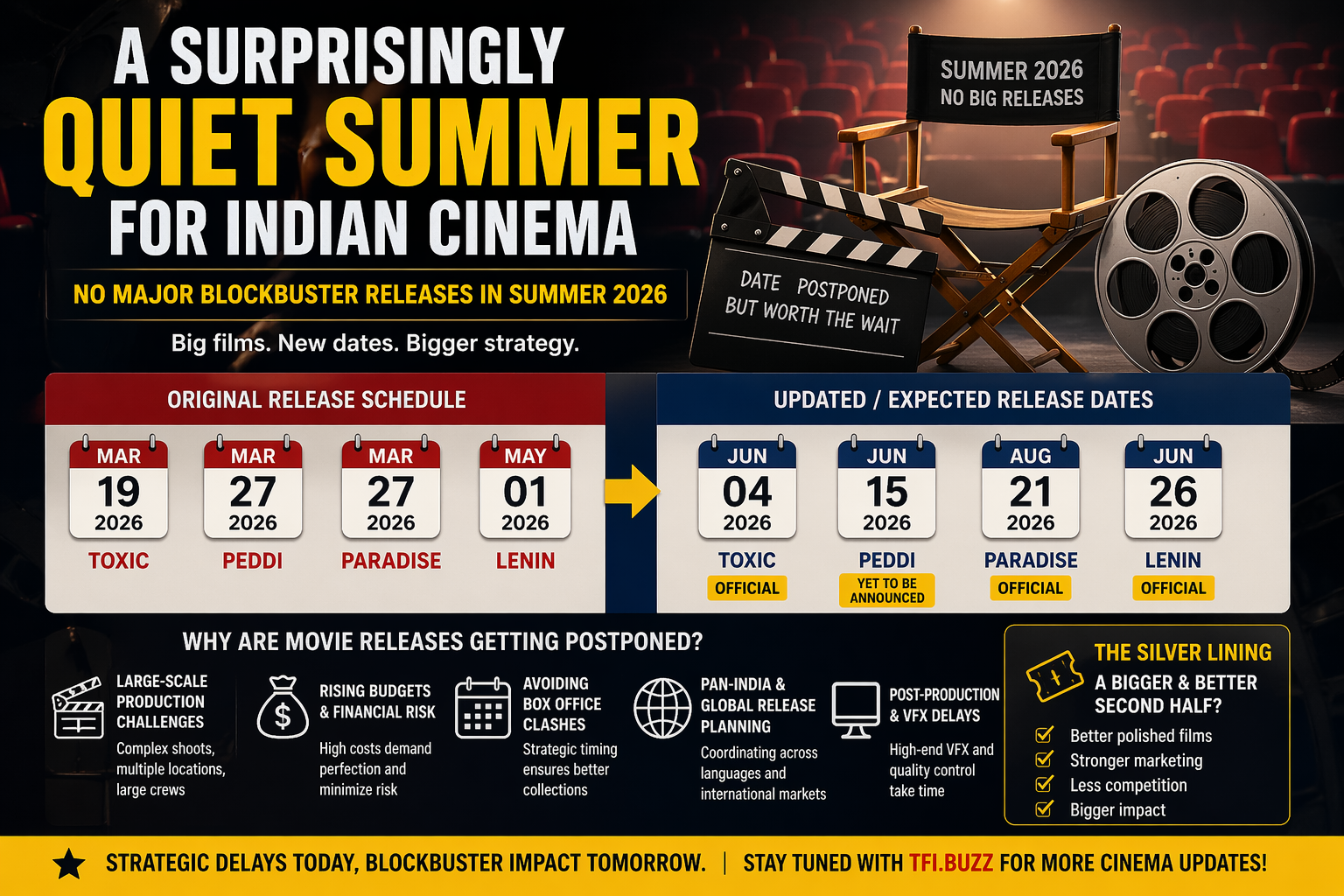
A Surprisingly Quiet Summer for Indian Cinema
Summer has traditionally been one of the most lucrative seasons for the Indian film industry. Big-ticket releases, star-driven films, and pan-India spectacles usually dominate this period, drawing massive crowds to theatres. However, Summer 2026 has turned out to be unexpectedly quiet, with no major blockbuster releases hitting the screens.

This unusual gap has sparked discussions among trade analysts and movie enthusiasts alike. While several high-profile films were initially scheduled for release, most have now been postponed, leaving the season without a marquee release.
The Missing Blockbusters: What Happened?
A number of anticipated films—including Toxic, Peddi, Paradise, and Lenin—were originally planned for a summer rollout. However, shifting timelines and strategic delays have pushed these films out of their initial release windows.
📅 Original Release Schedule
- Toxic – March 19, 2026
- Peddi – March 27, 2026
- Paradise – March 27, 2026
- Lenin – May 1, 2026
These dates suggested a packed and competitive summer, with multiple films potentially clashing at the box office.
Revised Release Dates: A Shift in Strategy
The release calendar has since undergone significant changes:
📆 Updated / Expected Release Dates
- Toxic – June 4, 2026 (Official)
- Peddi – June 15, 2026 (Yet to be officially announced)
- Paradise – August 21, 2026 (Official)
- Lenin – June 26, 2026 (Official)
These postponements have effectively cleared the summer window, pushing major releases into later months.
Why Are Movie Releases Getting Postponed?
Delays in film releases are not new, but they have become increasingly common in recent years—especially for big-budget, star-led projects. Several key factors contribute to this growing trend:
🎥 1. Large-Scale Production Challenges
Modern films, particularly pan-India projects, are being made on a massive scale. With high production values, elaborate sets, and extensive shooting schedules, even minor delays can disrupt timelines.
- Complex action sequences
- Multiple shooting locations
- Coordination with large crews
👉 These factors often extend production timelines beyond initial estimates.
💰 2. Rising Budgets and Financial Risk
Big films today come with huge budgets, sometimes running into hundreds of crores. Producers prefer to delay rather than risk an incomplete or underwhelming product.
- High investment increases pressure for perfection
- Marketing and distribution costs add to the risk
- A poorly timed release can impact revenue significantly
👉 Delaying a film is often seen as a safer option than rushing it.
📆 3. Avoiding Box Office Clashes
Release date clashes between big films can severely impact collections. To maximize profits, producers carefully choose release windows.
- Two star films releasing together divide audience attention
- Screen availability becomes limited
- Opening weekend collections get affected
👉 Postponements help films secure a solo release window.
🌍 4. Pan-India and Global Release Planning
With the rise of pan-India cinema, films are no longer limited to regional markets. Releases are now planned across multiple languages and even international territories.
- Synchronizing release dates across regions
- Coordinating dubbing and promotions
- Aligning global distribution strategies
👉 This added complexity often leads to schedule adjustments.
🎬 5. Post-Production & VFX Delays
High-end visual effects and post-production work are now integral to many films.
- CGI-heavy sequences require more time
- Quality control is crucial for audience expectations
- International VFX collaborations may cause delays
👉 Filmmakers prefer postponement over compromising on quality.
Is This a New Trend or the New Normal?
Postponements were once occasional, but today they have become a routine part of the industry. This shift reflects how filmmaking itself has evolved.

👉 Earlier:
- Films were completed quickly
- Release dates were more fixed
👉 Now:
- Films are treated as large-scale projects
- Release strategies are flexible and data-driven
This change indicates a more business-oriented approach to filmmaking, where timing is as important as content.
Impact on Theatres and Audience
The absence of big releases during summer 2026 has had noticeable effects:
🎟️ For Theatres
- Reduced footfall due to lack of major attractions
- Increased reliance on smaller films
- Revenue fluctuations during peak season
🍿 For Audiences
- Limited choices for large-scale entertainment
- Increased consumption of OTT content
- Higher expectations for upcoming releases
The Silver Lining: Bigger Second Half?
While the summer may feel underwhelming, the second half of 2026 is shaping up to be more exciting.
With films like Toxic, Peddi, Paradise, and Lenin now rescheduled, audiences can expect:
✔ Better-polished final products
✔ Stronger marketing campaigns
✔ Less competition between big films
👉 This could lead to a more impactful box office performance later in the year.
Final Thoughts: Strategic Delays Over Rushed Releases
The lack of major releases in Summer 2026 is not necessarily a negative sign. Instead, it reflects a strategic shift in the film industry.
Producers and filmmakers are increasingly prioritizing:
- Quality over deadlines
- Smart release timing
- Maximizing box office potential
👉 In today’s competitive entertainment landscape, when a film releases is just as important as what it delivers.
Explore More on TFI.Buzz
- RAAKA: Icon Star Allu Arjun’s Grand Entry into International Cinema
- Is Avengers: Doomsday the True Sequel to Endgame?
- Is Spider-Man: Brand New Day a Fresh Start for Marvel’s Web-Slinger?
- Is Project Hail Mary 2026 the Most Ambitious Sci‑Fi Film of the Decade?
- Biker Movie Review (2026): High-Speed Action Meets Emotional Sports Drama
- Love Insurance Kompany Review (2026): A Futuristic Rom-Com with Heart and Humor
- Youth Review (2026): A Balanced Youthful Entertainer with Emotion & Humor
Stay connected with TFI.Buzz for authentic insights, reviews, and updates straight from the world of Indian cinema.